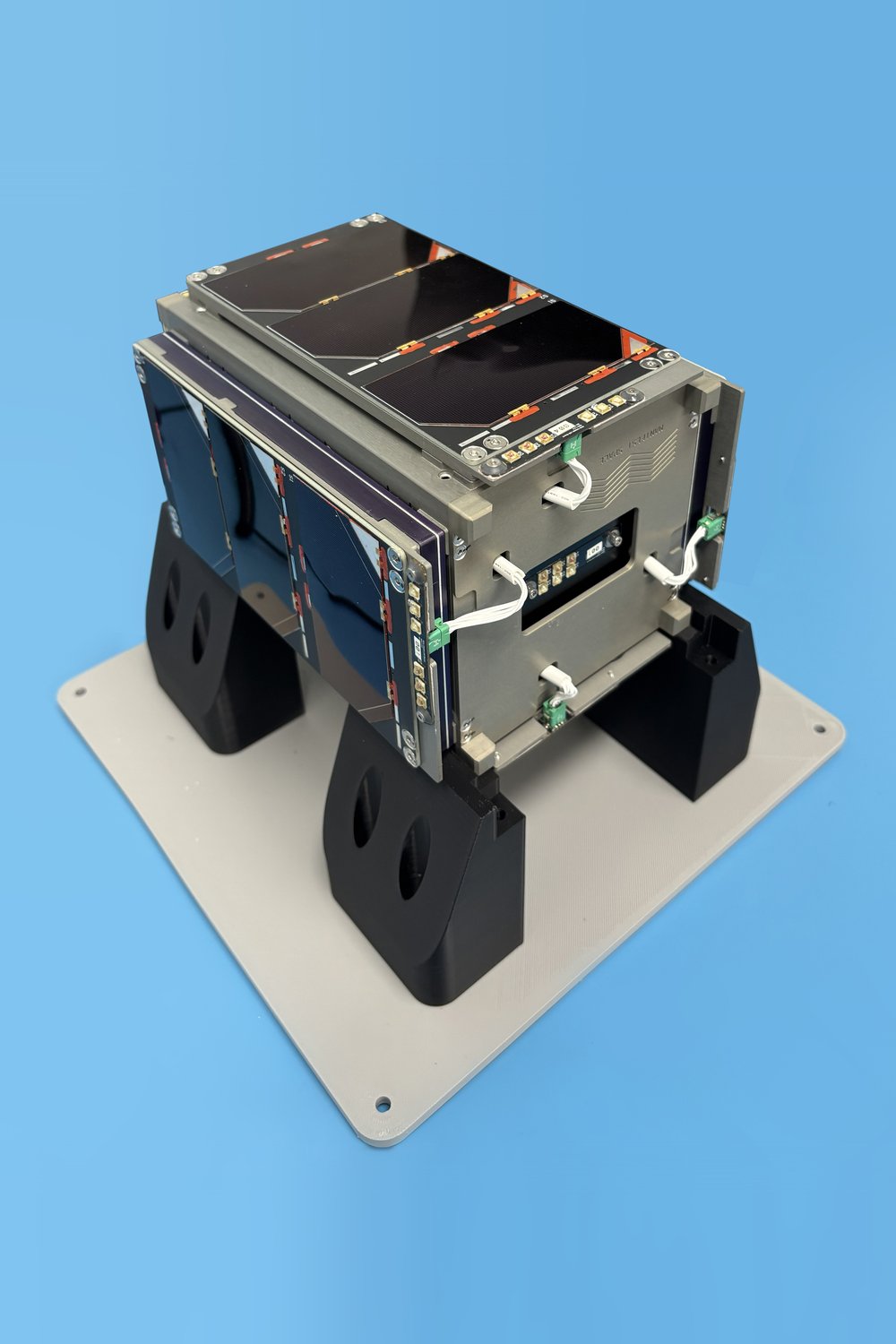
Our neighbor to the south just made a clear move in the race for space startups. On August 28, 2026, the Huntsville-based Apollo Coalition announced the Alabama Space Accelerator (ASA), a statewide program built to help early-stage aerospace and defense companies turn good technology into contracts. Its tagline is "Alabama Born. Universe Bound."
For Tennessee, this is worth a close look. Huntsville is about two hours from Nashville, and the companies that ASA is designed to attract are the same kind of founders that TN Space works to grow here.
What the Alabama Space Accelerator Is
According to 256 Today's coverage on August 31, 2026, and the program's website, ASA offers:
- Zero cost and zero equity for selected companies
- A 10-week intensive cohort, with the first cohort starting October 8, 2026
- Up to 10 companies across two cohorts
- 12 months of one-on-one mentorship for the highest-potential graduates
- Specialized training, access to aerospace test facilities, and introductions to commercial and defense procurement channels
- A home base at RCP Companies' office in Huntsville's MidCity District, with a virtual option for founders outside North Alabama
The target sectors are commercial satellite software, propulsion, autonomous systems, advanced manufacturing, and dual-use aerospace hardware. Life sciences and agtech companies with space applications are also eligible.
The rollout moved quickly. A free LAUNCH & Learn workshop on September 9 at Topgolf MidCity sold out. Applications for the first cohort closed September 14. On October 8, the inaugural cohort founders were introduced at a LAUNCH Lunch at the U.S. Space & Rocket Center.
Who Is Behind It
ASA is a coalition. As the program's About page describes it:
- Apollo Coalition, Inc. is a 501(c)(3) economic development nonprofit that RCP Companies started in 2021 as the MidCity Accelerator Foundation. It administers the program. Apollo says its programs have helped founders raise $45.1 million across 110 founders.
- Treble One is a veteran-founded space and defense advisory firm that runs the curriculum and mentorship. It reports helping more than 250 companies secure $925 million in non-dilutive funding. Treble One already runs Huntsville's CRP DefenseTech Accelerator with the Huntsville/Madison County Chamber, which is now on its third cohort.
- Blue Cross and Blue Shield of Alabama funds the program through the Innovate Alabama tax credit.
- Innovate Alabama runs that tax credit program.
- MidCity District and RCP Companies provide the physical home.
ASA also lists NASA Marshall Space Flight Center, NASA Glenn Research Center, and U.S. Space Command as federal partners.
"This accelerator puts Alabama founders in front of the people who actually buy defense and space technology, not just those who fund it," said Mike Johannessen, executive director for Treble One's Alabama accelerators, in the 256 Today article.
The Funding Model Is the Real Story
The most important part of ASA may be how it's paid for. Alabama's Innovate Alabama Tax Credit lets companies and individuals direct up to 50% of certain state tax liabilities to approved economic development organizations. They get a dollar-for-dollar credit in return. The statute provides up to $25 million in credits a year, and in 2025 requests topped $31 million.
The Apollo Coalition was among the 2026 credit recipients. In practice, a large Alabama employer can steer tax dollars it already owes into a local space accelerator. The state gets a startup pipeline, and the startups pay nothing and give up no equity.
How Tennessee Compares
Tennessee has real strengths of its own, but its model looks different.
Tennessee's space-specific programs are research- and pre-accelerator-led. The main one is the Space-Edge Pre-Accelerator. It's a national consortium of Vanderbilt University, Arizona State, Rice, UCF, and the Space Foundation, and Vanderbilt serves as the Mid-South hub. Space-Edge is also free and takes no equity. It runs 12 weeks, mostly virtual, and helps companies that are new to space work out how microgravity, satellite data, or orbital platforms fit their business. Its second cohort included four Mid-South teams hosted by Vanderbilt, and Nashville's Blackwing Space took part in the 2025-26 cohort.
Alabama's model is procurement-led. ASA is aimed at founders who already know they are in space and defense. Its goal is contracts, subcontracts, and programs of record with NASA, the Space Force, and DoD buyers, many of whom are in Huntsville.
Here is how the two programs line up:
| Alabama Space Accelerator | Space-Edge (Tennessee hub) | |
|---|---|---|
| Launched | Announced Aug 28, 2026 | First cohort graduated Jan 2025 |
| Run by | Apollo Coalition + Treble One | National university consortium; Vanderbilt is the Mid-South hub |
| Format | 10-week cohort, in person in Huntsville or virtual | 12-week, mostly virtual |
| Cost / equity | Free / none | Free / none |
| Focus | Winning commercial and federal space and defense customers | Building a space strategy for companies new to space |
| Funding | Corporate donors through a state tax credit | University and consortium partners |
| Follow-on | 12 months of mentorship | Network and validation pathways |
Tennessee also has hard assets that Alabama founders don't have next door. These include the Arnold Engineering Development Complex and the University of Tennessee Space Institute in Tullahoma, a large advanced manufacturing base, no state income tax on wages, and capital and programs through Launch Tennessee. What Tennessee doesn't yet have is an in-state, space-dedicated accelerator with a standing funding source like Alabama's tax credit.
Competitor, Neighbor, or Partner?
It's easy to read ASA as competition, and in part it is. Every founder who builds in MidCity is one who didn't build in Nashville, Knoxville, or Tullahoma. But the Southern space corridor works best when its parts connect:
- A Tennessee company could build hardware here, test at AEDC, and use a program like ASA to reach Huntsville buyers.
- A Huntsville startup could tap Tennessee manufacturing and Space-Edge's research network.
- Shared events, mentors, and investor networks across the I-65 corridor would help both states compete with Colorado, Texas, and Florida.
What Tennessee Should Take From This
Alabama's announcement offers a useful template for Tennessee:
- A dedicated, recurring funding mechanism. Tax-credit-funded accelerators give programs a dependable budget and give corporate donors a reason to take part.
- Procurement-focused support. Space-Edge helps companies find their space strategy. A follow-on step that connects Tennessee founders with federal and commercial buyers would complete the path.
- A visible home base. MidCity gives ASA a physical address and a community. Tennessee's space founders would benefit from the same kind of gathering point.
TN Space will keep tracking the Alabama Space Accelerator's first cohorts and outcomes. In the meantime, Tennessee founders building in space, defense, or dual-use technology should look at both programs. Space-Edge can help sharpen your space strategy, and ASA is a short drive away if you're chasing Huntsville customers.
Building a space company in Tennessee? Contact TN Space to connect with programs, partners, and investors across the state.